
Journalism is no longer just reporting for newspapers or TV stations. People consume news differently. Their expectations of journalists have evolved, too. The reader of today expects deep health tales, sports analysis, travel experiences, and environmental studies. But smartphones have made it easy to capture and share stories as they are happening. The change has created a range of professional options with diverse skills and topic expertise. The best journalism colleges in India for aspiring journalists are the ones that provide classroom study together with an opportunity to learn about how media operates in practice.
This blog sheds light on five emerging fields of journalism and their career scope:
1. Medical Journalism: Communicating Health Information Responsibly
A story about health is rarely about a new ailment or a new medical discovery. What readers truly want to know is what a diagnosis means to them, whether a therapy genuinely works, and how changes in the healthcare system will affect their everyday lives.
Medical journalists help answer those questions. They take complex medical information and put it in plain, simple language that people can understand. Their work goes much further than explaining studies. They cover public health campaigns, new research, and healthcare policy. And they fact-check everything thoroughly so misinformation doesn’t spread.
It’s a challenging career: it involves a lot of research, a good understanding of medical language, and the confidence to sit down with doctors and other health professionals and ask the proper questions. Those skills open various opportunities, including health reporting, medical writing, and health communications.
2. Sports Journalism: Bringing Sporting Stories to Audiences
Sports journalism isn’t only about the scores and results. Fans want to know how a player played, what led to a team win, and what went wrong on a tough day. Those stories take strong research, good interviews, and a great understanding of the game. Journalists also have to be conversant with video, photographs, and online content, as live updates and sports discussions are now being played out on digital platforms and social media.
This field offers career opportunities in:
- Sports Reporting
- Commentary
- Analysis, and
- Digital Media
3. Travel Journalism: Telling Stories Beyond Destinations
Travel journalism isn’t simply about going to new locations. It’s about telling the stories that make any place worth going to. An excellent travel story brings to life the local traditions, the food, the heritage and the experiences of the people who live there. As more and more travellers look for inspiration from digital magazines, blogs and videos, the want for compelling travel information is ever increasing.
The field offers options to work as:
- A travel writer
- Journalist
- Photographer
- Content Provider
4. Mobile Journalism: Reporting Through Smartphones
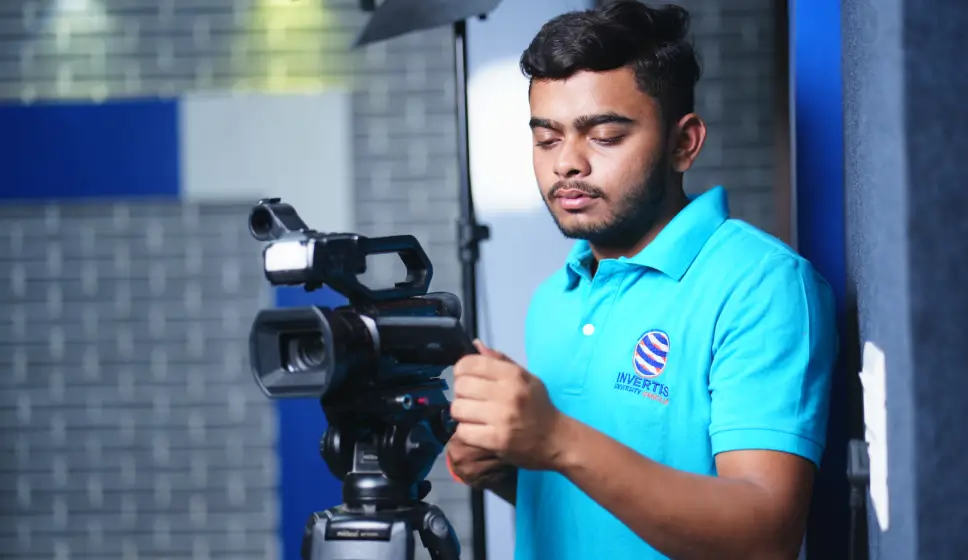
A journalist no longer needs a full camera crew to cover a story. In many cases, a smartphone will be adequate to record an interview, capture pictures, or shoot a video at the scene. This sort of reporting is known as mobile journalism, or MoJo. This allows journalists to share incidents fast, particularly when a news story is in progress. But shooting a video is only half the job. The mobile journalist also needs to know how to frame images, record clear audio, edit film, and verify facts before publishing. The students at Invertis University acquire actual exposure of filming and editing with the media facilities of the university.
5. Environmental Journalism: Reporting on the Planet's Challenges
Rarely do environmental stories declare themselves as science or policy. They start with the mundane, a river going dark or a season coming on wrong, and only gradually unfold the climate, pollution, or conservation issues behind it. The writer must read the studies, test the statistics, and check every claim to better comprehend this before publishing, because readers act on what they are told.
This is precisely why fact-checking and field storytelling are as important as the writing itself. It creates jobs for climate journalists, sustainability writers, and documentary makers. At Invertis University, research-led learning and fieldwork empower students to appropriately report such situations.
Comparing the 5 Emerging Journalism Fields
| Journalism Field | Primary Focus | Potential Career Options |
|---|---|---|
| Medical Journalism | Healthcare and medical developments | Health Reporter, Medical Journalist |
| Sports Journalism | Sports events and athlete stories | Sports Reporter, Commentator |
| Travel Journalism | Destinations, cultures, and tourism | Travel Writer, Travel Journalist |
| Mobile Journalism | Smartphone-based news production | Mobile Journalist, Video Reporter |
| Environmental Journalism | Climate and ecological issues | Climate Reporter, Environmental Journalist |
How Journalism Education Prepares Students for Emerging Media Careers
Newsrooms don’t recruit people who can only write or only shoot or only edit. With stories now traveling across television, radio, and social platforms simultaneously, a prospective journalist needs theory to understand why the media operates as it does, practical training to execute the task, and digital skills to reach viewers. This is exactly why the top journalism colleges in India stress so much on learning via practice.
This is the concept on which the teaching in the Department of Journalism & Mass Communication, Invertis University is based. It also has television and radio production capabilities in the Media Lab, with cameras, editing suites, and audio post-production.
Students produce news bulletins, report, and generate digital content. Industrial tours, workshops and guest lectures bring them closer to organizations like News18, India TV, News Nation and Doordarshan. On the practical side, these facilities provide a base for students in medical, sports, travel, mobile, and environmental media.
Essential Skills for Aspiring Journalists
| Skill | Its Importance in Modern Journalism |
|---|---|
| Research and Fact-Checking | Ensures accuracy and credibility |
| Communication | Helps present information effectively |
| Storytelling | Makes reports engaging and meaningful |
| Photography and Videography | Supports visual journalism |
| Digital Media Proficiency | Enables reporting across multiple platforms |
| Analytical Thinking | Helps interpret complex developments |
| Ethical Reporting | Maintains professional responsibility |
Connecting Journalism Skills with Practical Learning
- Research and interviewing sharpen any health story
- Sports coverage grows from reporting and photography
- Good travel stories need a trained eye
- Video editing turns raw footage into news
- Fieldwork gives environmental stories their real depth
- Storytelling is the thread running through every beat
- One set of skills, many possible careers
- Students practise these skills inside the department’s media facilities
- These abilities transfer easily from one field to another
- Learning the craft first makes specialising later easier
Closing Remarks
Most people think of a journalist as a newsroom type fellow, chasing the day's headline. But the occupation has quietly split into several more specialized occupations. The causes are not hard to find. Technology has changed the way news is obtained and delivered, and readers now pay attention to issues that interest them individually. Newer societal concerns require reporters who have genuinely examined the ground they are covering.
Students weighing the best colleges for journalism should therefore ask where they will practise. Invertis University’s B.A. Journalism & Mass Communication programme answers that through its Media Lab and industry interactions. Take the next step towards a dynamic media career with Invertis University’s Department of Journalism & Mass Communication, and build the skills the profession now expects.
Frequently Asked Questions
Medical, sports, travel, mobile, and environmental journalism are emerging fields offering specialised reporting opportunities across traditional and digital media platforms.
Modern journalists need research, fact-checking, storytelling, communication, photography, video editing, digital media proficiency, and ethical reporting skills.
Mobile journalism uses smartphones to capture, edit, and publish news quickly, reducing dependence on traditional camera crews and production equipment.
Invertis University offers practical media training through its Media Lab, production facilities, industry interactions, workshops, and hands-on reporting assignments.


