Happenings
Beer Distribution Game Organised by MBA Department Enhances Supply Chain Management Skills
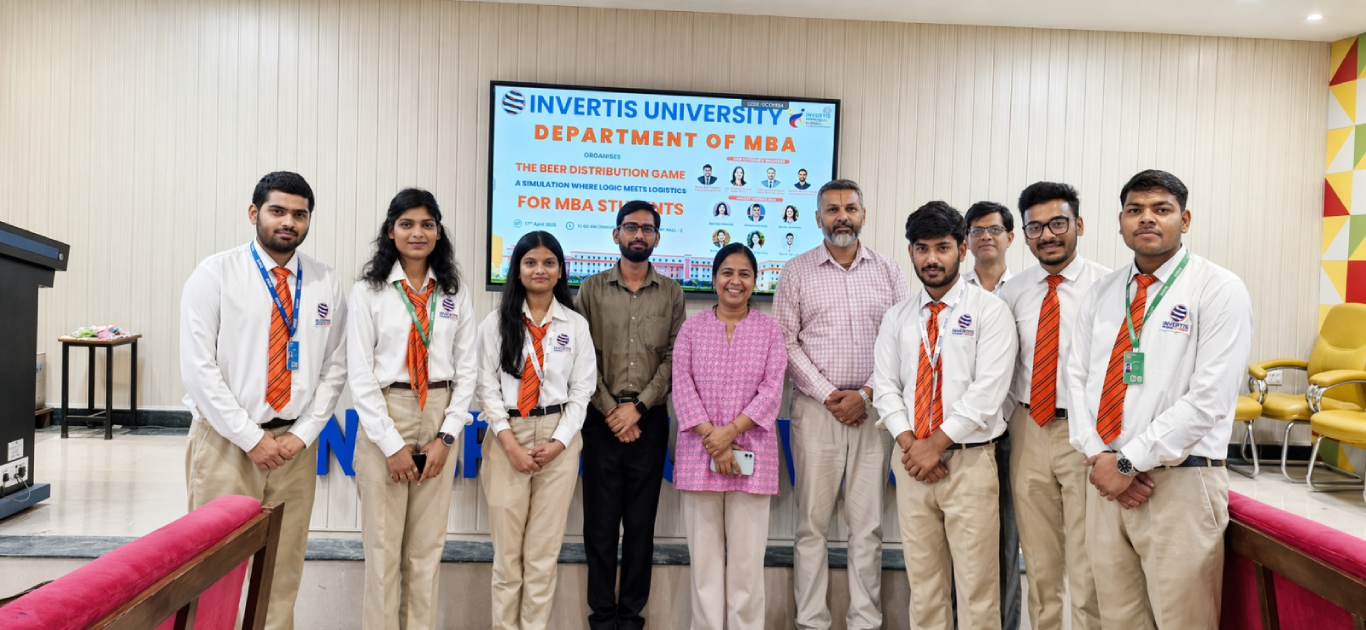
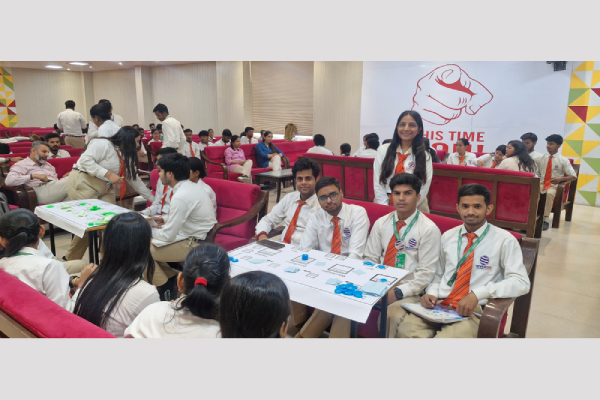
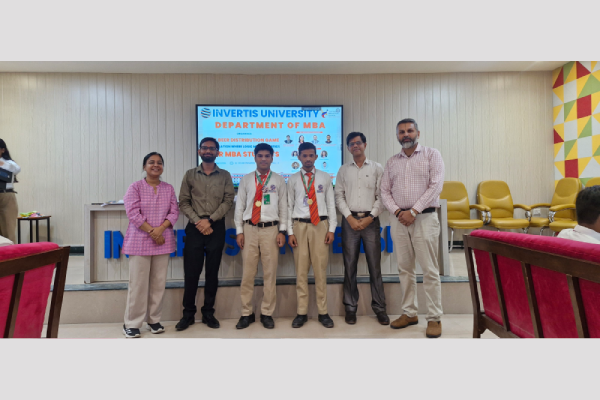
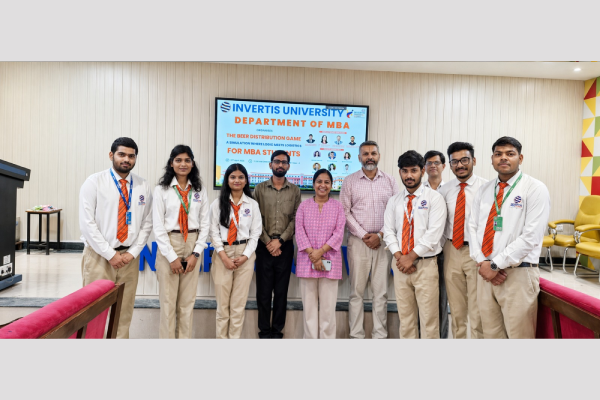
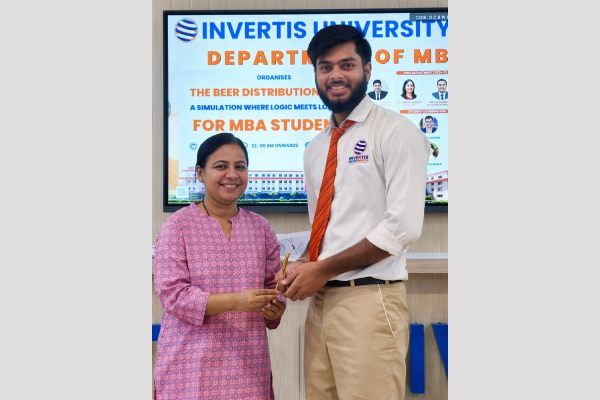
The MBA Department of Invertis University recently hosted a practical learning session titled "The Beer Distribution Game" on 17th April 2026 in Seminar Hall-1, drawing enthusiastic participation from students across the program.
What the Game Teaches
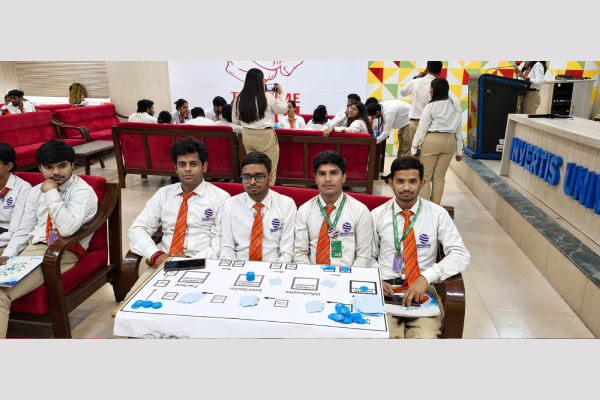
The Beer Distribution Game is a well-known simulation used in management education to demonstrate how information — or the lack of it — moves through a supply chain. Playing the roles of retailer, wholesaler, distributor, and factory, students had to make ordering and inventory decisions with only limited visibility into actual customer demand.
Through the exercise, participants got a firsthand look at some of the most common — and costly — problems in supply chain management:
- Demand Fluctuation: Understanding how small changes in customer demand create ripple effects throughout the supply chain.
- Inventory Control Challenges: Managing inventory effectively despite delays in order fulfillment and changing demand.
- Communication Gaps: Observing how limited information sharing impacts coordination among supply chain partners.
- The Bullwhip Effect: Experiencing how minor variations in retail demand can escalate into significant fluctuations further up the supply chain.
Rather than learning these concepts purely through theory, students experienced directly how poor coordination and delayed information can lead to stockouts, excess inventory, and inefficiency — lessons that translate straight into real-world operations and supply chain roles.
Faculty Involved
The session was conducted by Dr. Prabhat Kumar Sharma and Dr. Viksit Tripathi, with additional support from Dr. Nitesh Saxena and CFA Rakesh Gupta, whose guidance helped participants connect the simulation back to practical business decision-making.
Why This Kind of Session Matters
Sessions like this reflect a broader shift in how the MBA Department at Invertis approaches management education prioritizing simulations, live exercises, and applied problem-solving alongside traditional coursework. For students heading into operations, supply chain, or general management roles, understanding coordination failures through direct experience tends to stick far longer than reading about them in a textbook.
The MBA Department continues to organize similar interactive sessions and industry-style simulations as part of its curriculum, aimed at building practical decision-making skills alongside academic knowledge.