
Department of Mechanical Engineering
- Program CodeBTECH-021
- Duration 4 Years
- LevelGraduate Programme
- Department Department of Mechanical Engineering
Robotics and Automation remains the buzzword among industries worldwide. The concept has helped robots and autonomous systems achieve unprecedented growth. Robotics technicians, engineers, and scientists have achieved high salaries, funding opportunities and unlocked new research capabilities in the past few years. Other professionals have managed to introduce unique ventures due to immense innovation and growth in this field.
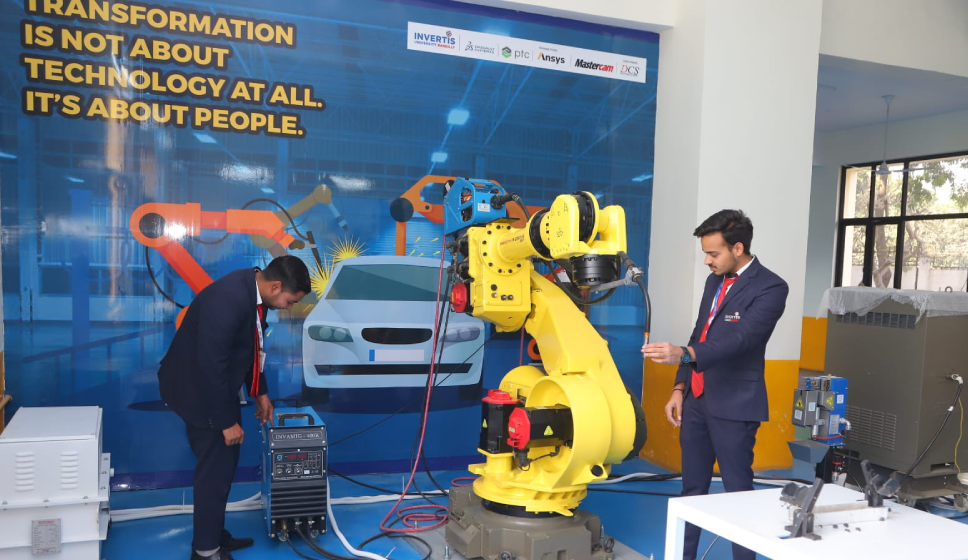
Robotics engineers conceive, design, build and maintain robots and robotic devices. Their work involves drafting, testing, and applying high-level programming skills to develop innovative automated solutions. Depending on the type of robot and application, the job roles can vary significantly. For instance, a professional can design robots for the healthcare industry or work as a robotics operator in the manufacturing and supply chain sectors. Some other specific applications in this field include Drone deliveries, Mechanical welding arms, Self-driving cars, Autonomous machines and Artificial intelligence-based sorting mechanisms.
The goal of the four-year undergraduate B.Tech. in Robotics and Automation program is to design and develop robotic systems and automated machines by combining the principles of mechanical engineering, electronics, and computer science.
It offers a solid foundation in mechanical engineering principles and cutting-edge robotics technologies to students interested in robotics and automation.
The curriculum gives students the theoretical understanding and hands-on training they need to create sophisticated automation and robotics systems.
1,00,000 1stYr.
1,00,000 2ndYr.
1,00,000 3rdYr.
1,00,000 4thYr.
50% (45% for SC/ST) marks in 10+2 with Mathematics and Physics along with Chemistry/Computer Science.
Admission can be sought on the basis of: The rank secured in national level exams like JEE, CUET or other equivalent exams. OR The Invertis University Common Entrance Test (IUCET). OR The merit of qualifying exam (10+2)
PO 1
PO-1
Explore the knowledge of mechanical, electrical, computer science and artificial intelligence in the design of engineering systems processes and products.
PO 2
PO-2
Explore the application of advanced simulation software like Matlab and Machine learning in the different process industry
PO 3
PO-3
Career Options: Robotics engineer, automation engineer, control engineer design engineer, industrial and process control Engineer
PO 4
PO-4
Outstanding industry-academia interaction through expert sessions, industrial visits, internships, professional societies and workshops.
PO 5
PO-5
Emphasis on holistic development of students through promotion of co-curricular activities and professional societies in the department.
PO 6
PO-6
Excellent placement track record.
- Robotics Engineer
- Mechatronics Engineer
- Product Development Engineer
- Manufacturing Engineer
- Control Systems Engineer
- Industrial Engineer
- Quality Control Engineer
- Automation Engineer
- Research And Development Engineer


